



























Shopping for whole house water filtration systems can be overwhelming, but we’re here to help. In this blog, we’ll answer common FAQs and share facts about Whole House Filter Systems.
What is a whole house filtration system?
Whole-house water filters provide filtered water to every entry point in your house. This means you will get filtered water to your kitchen, bathroom, bathtub/shower, and water-using appliances.
Shop Whole House Water Filter Systems
Where are whole-house water filter systems installed?
They are installed where the main water line enters your home.

What is a flow rate, and why is it important?
Flow rate is also known as Gallons Per Minute (GPM). To break it down even further, this means how many gallons of water your system can fill up in a minute. The restriction a filter creates is usually provided as Pounds Per Square Inch (PSI) at a given flow level. For example, FF10MBS-5 shows 2GPM at 2PSI. This means that at a flow rate of 2GPM, there will be a decrease in water pressure of 2PSI, which is a negligible amount.
What kind of connection does a whole-house filter system have?
Housings typically have threaded connections, but connection sizes vary. The most common connection size is 3/4” or 1”.
What connection size should I choose?
The connection size for the filter housing should be equal to or larger than the main water line point of entry.
What does a whole-house filtration system look like?
A whole house filter has three main parts:
- Sump or Filter Housing
- O-ring
- Lid
A filter wrench and mounting brackets are standard accessories for whole-house filter systems.

What do you use to lubricate O-rings?
You should only use food-grade silicone to lubricate an O-ring. Vaseline can cause the O-ring to dry out, crack, stretch, or distort its shape.
What size filter housing should I choose?
Several things can determine what kind of filter housing you will need. We recommend the largest housing you have room for.
You’ll also need to consider what contaminants you must filter out. When it comes to specific pollutants, it can be challenging to achieve a noticeable or otherwise sustainable improvement with a drop-in cartridge system; for example, iron, hard water, high TDS, high sodium, and other more specialized applications. These typically need large tank-style systems. Even a more common contaminant like chlorine can be challenging to treat if you are limited to a smaller 10” system.
We recommend testing your water quality before investing in a whole-house water filter system. An at-home water test kit can easily detect contaminants in your water.
Why You Should Test Your Water
Knowing precisely what’s in your water is a crucial first step.
In the US, most people get their water from a public water system or a private well.
Public water systems are regulated and provide annual Consumer Confidence Reports; however, these reports reflect the water quality coming from the treatment plant, not the quality of the water coming into your home after traveling through pipes and plumbing. This is why it’s essential to test your water so you know exactly what’s coming into your home.
Homeowners with private wells should consider annual testing for contaminants in the immediate area, such as nitrates, bacteria, metals, and other substances.
When you test your water, it helps you choose the right solution based on your needs.
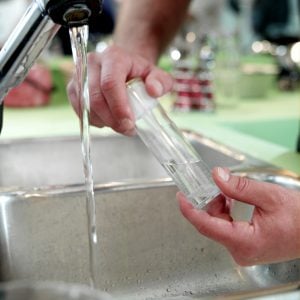
What kind of filter does a whole-house filter system use?
There are two main types of water filters for whole-house filter systems:
- Sediment. This is the most common filter used for whole-house filter systems and is recommended for general use. Reduces sediment in water.
- Carbon is the second most common filter type. It improves water taste and odor and removes sediment.
You’ll want to consider your filtration priorities before choosing which type of whole-house filter to use.
Which whole-house filter type is right for me?
Here’s a quick reference for the different filter types:
- Pleated water filter: It is a sediment filter that removes large and fine sediment particles like sand, dirt, silt, and rust. This is an excellent option for improving the taste of your water.
- Poly spun water filter: A sediment filter made of melted polypropylene spun into a cylinder. This filter’s primary function is to filter out large and fine particles like sand, dirt, silt, and rust.
- String-wound water filters: Catch dirt and sediment on the filter’s surface and through its core. They do not remove chemicals or improve the taste of drinking water.
- Carbon block water filter: Carbon block filters are very porous and held together with a bonding agent. The carbon absorbs contaminants in the water, which can restrict the flow rate. Most carbon block filters are known best for removing chlorine and bad taste from drinking water. Carbon block filters, if certified, can also remove things like lead and bacteria.
- Granular activated carbon water filter: This carbon filter contains loose activated carbon. Regular GAC filters are typically more restrictive. They are designed to ensure enough contact time with the media to achieve chlorine reduction. This is usually not recommended for whole-house use.
Quick note: There is a different type of filter known as RFC, or radial flow carbon. This uses GAC, so it does not restrict water flow and is, therefore, suitable for whole-house use.
Shop Whole House Water Filters
You will need a more specialized approach if you have more advanced water quality concerns, such as heavy metals, PFAS, or disinfection byproducts. Additional systems like reverse osmosis or ion exchange units may be necessary to target these more challenging contaminants.
You must choose the right filter type for the specific contaminants present in your water.
How do I choose the right micron level for my filter?
The lower the micron number, the tighter the filter media. Low-micron-level filters can clog more easily, restricting flow rate and requiring frequent filter changes. Regarding whole-house filters, we recommend starting at 20-30 microns and moving down from there. It usually takes trial and error to get it right for its application.
How do I know if a water filter will be effective against specific contaminants?
Research is key to ensuring a water filter meets your water quality needs. Here are a few things you should consider to ensure you get the most out of the filter you choose:
- Test First. As mentioned, testing your water should be a first step before investing in a water filtration system. Water testing allows you to understand precisely what contaminants are in your water. From there, you can better choose the system and filters that best meet your needs.
- Basic carbon filters will take care of chlorine taste and odor issues.
- Specialty filters are required to remove harmful substances like lead, fluoride, and PFAS.
- Reverse Osmosis or UV filtration will be most effective against heavy metals, microbes, and other specialty concerns.
- Certifications. Third-party certification is essential to ensure that the filter effectively reduces specific contaminants. The National Sanitation Foundation (NSF International) and the Water Quality Association (WQA) are the most reputable organizations offering water filter certifications. These certifications appear as logos or numbers on the packaging or product listing. Here are a few of the most common certifications you will see on water filters:
- NSF/ANSI Standard 42: Certified to improve taste, odor, and chlorine reduction.
- NSF/ANSI Standard 53: Certified to remove contaminants with health effects like lead and cysts.
- NSF/ANSI Standard 401: Certified to cover “emerging contaminants”, including pharmaceuticals and certain chemicals.
- Follow the Manufacturer’s Instructions. Following the installation and maintenance instructions by the filter maker will ensure that it performs as advertised.
- Check and replace when needed. Consistent replacement is essential to ensure the filter is effectively doing its job. If you’re not sure what the schedule should be, check the filter every so often. Set yourself up for success with reminders to change your filter when it’s time.
- Pull in a Professional. As tempting as it might be to set up a water filtration system on your own, professional installation can help ensure it is properly installed and may help you maintain warranty coverage.
- Periodic Testing. Testing your water periodically will help you feel confident you’ve chosen the correct tools to improve your water quality. It can also help you identify issues before they become bigger problems.
What does BB mean when describing filter size/type?
BB is a common designation for water filters of the Big Blue size. That refers to the filter’s diameter, around 4.5 inches. Note that water filters also come in varying lengths; 10-inch and 20-inch are the most common.

What whole house filter size do I need?
The size you need depends on your daily water usage. You’ll also want to ensure that your size fits your filter housing.
How long does a whole-house water filter last?
The life of the filter will depend on use and water quality. You should change your whole-house water filter every 6 months, especially for carbon filters. Carbon filters can foster bacterial growth over time, so most must be replaced at a maximum of 6 months.
As a rule of thumb:
- 10” standard filters last 1-3 months
- 10” BB filters last 3-6 months
- 20” standard filters last 3-6 months
- 20” BB filters last 6-12 months.
Of course, this depends on water quality and usage.
How do I know when I need to change my whole-house water filter?
A decrease in water pressure is a good indicator. A common misconception is that you need to change your filter when it “looks dirty;” however, your filter is supposed to look dirty. A dirty filter means it’s doing its job!
How do I know if my water filter is working correctly?
Water quality testing is the best way to check if your whole-house water filter works. Compare the water quality before and after you install the filter. Here’s a step-by-step method for doing it:
- Test Unfiltered First. Before installing your filter, use a water test kit like this SenSafe Water Quality Test Kit. This will show you the level of contaminants in the water.
- Install the new filter and let it settle. After installing a new filter, you should always allow it a break-in period, also known as flushing the filter. To flush the filter, run water through the new filter until you can flush out a few gallons. This process helps clear out any manufacturing materials or loose media.
- Test Again. Testing your water again after you’ve installed and flushed the filter helps you get an accurate picture of the filter’s performance.
- Compare. Compare the before- and after-filter installation water tests to note any differences. If the levels of contaminants do not change much, you’ll want to reconsider your filter selection.
Test your water often and during a filter change. Doing this will help you get the most out of your system and the filters you’ve chosen.
Maintenance is a Must
To maximize your investment, it is vital to prioritize maintenance and follow the manufacturer’s recommendations for your specific filter and filtration system. One of the biggest reasons filters fail is that people forget to replace them on time.
Here are a few tips to follow to help make water filtration maintenance easier:
- Schedule it. It’s as easy as marking it on the calendar or setting a reminder on your phone. Setting up a recurring reminder to change your filter can simplify filter maintenance. Even better- use a filter subscription service like Filters Fast’s Home Filter Club. Not only will you get the filter delivered when it’s time to change, but you’ll save money when you do!
- Knowledge is power. Knowing precisely what’s in your water will help you better understand how often you need to replace it. For instance, if your water demand is high and contains a lot of sediment, more frequent filter changes will be necessary.
- Pay attention to pressure. If you notice a sudden decrease in water pressure, it’s a sign that your filter needs to be changed.
- Gather Guidance. Depending on the type of filter you use, you should follow the manufacturer’s recommendations for maintenance.
- Watch the after temperature. Some filters cannot handle hot water. This can drastically decrease the filter’s performance and lifespan.
- Cleanliness is Key. When replacing a filter, make sure you also clean the housing and inspect it for any signs of mold or buildup. Keeping the system clean will help maximize the filter’s life and water quality.
These tips will help you save time and money and provide great-quality water for yourself and your loved ones.
Water Filtration for Your Whole Home
Your water filtration needs are unique, and we’re here to help you find the system that best fits them. If you need assistance finding the filtration system and filters that are right for you, contact us at 866-438-3458 or [email protected].
Related blogs:
- The Top 3 Reasons Why You Should Consider a Home Filter System
- Why Whole House Water Filter Systems?
- Everything You Need to Know About Whole House Filter Systems



Katie says
Hi Cynthia,
That’s a great question! Water softeners are often recommended to address hard water issues. If you would like assistance in selecting the right filtration system for your unique needs, please reach out to one of our Customer Experience reps via email at [email protected] or give us a call at 866-438-3458.
Cynthia Schmitz says
Does this system help with hard water?
Katie says
Louis,
Thank you for reaching out to us. Please see the following links. The first offers a gravity fed water system for drinking water. The second link is a reverse osmosis under-sink system for drinking water. Unfortunately, we do not offer a whole house system for fluoride reduction. Thank you for your consideration. Have a great rest of the week!
■pH Recharge Glass Alkaline Water Filter Ionizer System Sale $124.97 (filtersfast.com)
■A.O. Smith AO-US-RO-4000 4-Stage Reverse Osmosis System Sale $179.00 (filtersfast.com)
Katie says
Timothy,
Thank you for reaching out to us. Please see the first link to view the most popular whole house filter system we offer. Please review specifications to confirm compatibility with your application. The second link shows a string wound filter cartridge that is similar to the one pictured. Thank you for your consideration. Have a great rest of the week!
■OmniFilter U25 Whole House Water Filter System Sale $59.95 (filtersfast.com)
■OmniFilter RS2-DS String Wound Filter 2-Pack Sale $12.45 (filtersfast.com)
Katie says
Steve,
Thank you for sharing feedback on our blog. We will keep this in mind for future posts.
Louis says
Do you have a solution for floride removal on city water?
Steve Schofro says
Sold filtration for industrial applications for decades.
Well presented in your part.
You must lead with the need of toxicity filtration.
Charcoal vs Teflon residue in our water. Easily Googled for the media stories on that calamity.
Then follow up with the other benefits such as lifespan improvements of our cheap plumbing.
Follow up with bullet selling points. They can be used to help the reader explain to others to get approval and buy in.
Steve.
Timothy says
Do you have a reccomendation for a brand of water filter. What brand is the one in the picture? Thanks
Katie says
Joseph,
Thank you for reaching out to us. You may need more advanced methods of water treatment for that substance. We would recommend having the water tested to confirm. The following kit is designed for well water applications: https://www.filtersfast.com/p-SafeHome-SH-WWTDIY1-Well-Water-Test-Kit.asp
Katie says
JSpears,
Thank you for reaching out to us. Please use the following link to view a popular product. Note, this is a replacement cartridge intended for a 10″ big blue housing. Please confirm specifications before ordering.
Omnifilter R06 Whole House HD Granular KDF Filter: https://www.filtersfast.com/OmniFilter-R06-WHole-House-Filter.asp
Joseph Fleming says
I have well water with a whole house filter using a string wound water filter. It traps a fine dirt sediment but a jelly type substance forms on the outside of the filter over time. What is it and how can I protect my house?
JSpears says
Do you have a solution for Sulfur water?
Katie says
Tom,
Thank you for reaching out to us. BB is a common designation for water filters of the Big Blue size. More precisely, that is a reference to the filter’s diameter, around 4.5 inches. Note, water filters also come in varying lengths; 10 inch and 20 inch are most common. Thank you for your consideration. Have a great rest of the week!
Katie says
Tom,
Thank you for reaching out to us. BB is a common designation for water filters of the Big Blue size. More precisely, that is a reference to the filter’s diameter, around 4.5 inches. Note, water filters also come in varying lengths; 10 inch and 20 inch are most common. Thank you for your consideration. Have a great rest of the week!
Tom says
What does BB mean when describing filter size/type?
Katie says
Ched,
Thank you for reading our blog. We’re glad that you agree!
Katie says
Steven,
Thank you for reaching out to us. We are sorry to say we have not come across this issue before. O-rings can be made from a variety of materials. It is possible the material of your o-ring is not compatible with the food-grade silicone. Over-tightening the sump could have also contributed to the issue. We would recommend reaching out to the system manufacturer for technical support.
STEVEN RIVERS says
The last time I changed my whole house water filter, I installed the o-ring using food grade silicone, but it stretched anyway. When I went to do a filter change today, the o-ring was about 2 inches larger than it was before. Since I didn’t use Vaseline or anything other than the recommended food grade silicone lube, I am at a loss to understand why this happened. Can you explain it?
Katie says
Tim,
Thank you for reaching out to us. Dark stains are usually due to manganese and iron content. We would recommend having your water tested to best identify the contaminants.
Katie says
Steve,
We do! We have many to choose from. You can use this link to review our selection: https://www.filtersfast.com/search/go?w=20%27%20filter%20housing%20clear
or if you can type 20′ filter housing clear into the search bar on our website. If you have any additional questions about which filter housing you need, please feel free to send us an email at [email protected] or call us at 866-438-3458.
Thanks!
Tim Conklin says
I have well water and a water softener but my water leaves a dark film in the toilet bowl what type of filter should I have?
steve Phillips says
do you have a 20″ clear housing