
























International Women’s Day is March 8th. To celebrate, we wanted to honor women who have impacted the air and water filtration industry. Read about their extraordinary lives and contributions below.
Ellen Swallow Richards (1842-1911)
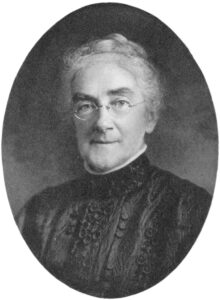
Ellen Swallow Richards was an American industrial and safety engineer and an environmental chemist. She was the first woman admitted to the Massachusetts Institute of Technology (MIT). Later, she became the University’s first female instructor.
Richards was very interested in issues of sanitation dealing with air and water quality.
The Massachusetts State Board of Health requested that Richards take 40,000 samples of local drinking water sources. This led her to develop the “Richards’ Normal Chlorine Map,” a predictive map of inland pollution in Massachusetts. Richard’s work was instrumental in helping Massachusetts establish the first water quality standard in America.
Richards was also a pioneer in home sanitation and wrote many books to help educate women about the sciences and how they applied to the home. She was concerned about the air quality in her house, so she switched to cooking with gas instead of coal heating and cooking oil. She had her husband install fans to help pull the air from her home to the outside to create a cleaner air environment in her home.
Without Richards, we wouldn’t have the water quality and home sanitation standards we have today.
Margaret Ingles (1892-1971)
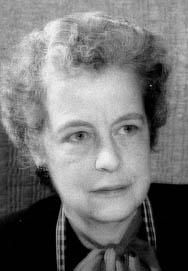
Margaret Ingles was the first woman to graduate from the University of Kentucky with a degree in Mechanical Engineering and the first woman to receive a professional degree in that field.
After she graduated, she studied with the Carrier Engineering Corporation and the American Society of Heating and Ventilating Engineers for nearly a decade. During that time, she contributed to developing the sling psychrometer, a tool for measuring relative humidity in the air.
She also helped develop the Anderson-Armspach dust determinator, a filter paper device used to measure the weight of atmospheric dust. The dust determinator became the industry standard for air filtration. She also helped create the effective temperature scale, which considers humidity and air movement to determine human comfort.
Next time you are relaxing in your home, think of Margaret Ingles, who helped make the comfort of your home possible.
Alice H. Parker (1985-1920)
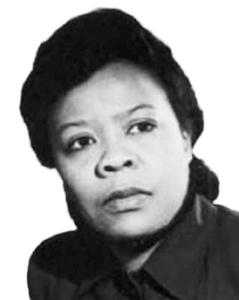
Alice H. Parker was an American Inventor whose patent made way for the gas furnace. Experiencing brutal New Jersey winters growing up fueled Parker’s desire to find an alternative to using wood or coal to heat the home.
Parker went on to design the first gas furnace powered by natural gas and the first heating system, which included individually controlled air ducts to distribute the heat throughout a building. What was unique about Parker’s design was that it was a form of “zone heating,” which helped moderate the temperature in different parts of a building.
Parker’s invention also decreased the risk of house fires by eliminating the need to burn fires overnight to keep a house warm.
Her patent inspired many other inventions, such as thermostats, zone heating, and forced-air furnaces.
Parker’s patent filing was remarkable, as she helped remove barriers faced by women in her generation. Although she had minimal opportunities because she was African American and a woman, successfully filing her patent was an outstanding achievement.
Without Alice H. Parker, we would not know the luxury of a warm, safe home. She is also featured in our post about Black Inventors in the Filtration Industry.
Dr. Theresa Dankovich

Teri Dankovich, PhD, developed a paper water filter with silver nanoparticles that removes bacteria, viruses, and other pathogens.
She has turned this simple technology into The Drinkable Book™, which includes the water filters and an instruction manual explaining how and why you need clean water. She has partnered with WATERisLIFE and has successfully trialed this patent-pending filtration technology in Ghana, Haiti, and Kenya.
Dr. Dankovich is a postdoctoral researcher in the Civil and Environmental Engineering Department at Carnegie Mellon University. She is researching the impacts of nanotechnology and its end-of-life fate in consumer products.
Dr. Dankovich is helping educate and provide clean water for people worldwide.
Glory Dolphin Hammes

Glory Dolphin Hammes is a Certified Indoor Environmentalist and licensed HVAC contractor specializing in air quality. She is also a member of the EPA’s air quality work group and currently serves as the CEO of IQAir North America, a Swiss-based air quality technology company.
Hammes has been a leader in the air quality industry for over 20 years and has made many contributions to the advancements of filtration technology during her tenure at IQAir.
She is on a mission to provide air quality data to underrepresented areas and ensure everyone can access clean air. She established the IQAir Foundation, a nonprofit that offers community air quality monitoring, and Clean Air for Kids, an initiative that helps improve the air quality in schools in impacted communities.
Glory Dolphin Hammes’s work is helping future generations have access to clean air.
Donna Mary Cirolia
Donna Mary Cirolia, a former director of government affairs at the Water Quality Association (WQA). She helped develop public policies and educational initiatives related to water treatment systems and product efficacy standards. She also led campaigns at the federal and state levels to gain acceptance of NSF standards and helped bring a new respect for products and services in the water industry.
Cirolia has helped create better policies and standards for the water industry!
Accelerating Action Today and Tomorrow
These women, past and present, have helped change the filtration industry. Their contributions have helped millions of people around the world have access to better air and water quality. Where would we be today without the impact of these innovative minds in this space? We hope you enjoyed reading about these incredible individuals and their influence over many of the filtration technologies we know today.



Leave a Reply