



























Water filtration has many different applications – commercial, industrial and personal. Different types of water filtration methods serve different purposes. If you’ve ever wondered which method is best for you, here is a simple guide to the basic types of water filter systems and their most common and most effective uses:
Water Filtration Method One: Sediment Filters
Usually, sediment filters are a pre-treatment method for removing particles from water. This protects the following filtration methods from clogging, which could lead to significant damage. They typically range from simple replacement pleated filters to filters with self-cleaning backwash features.
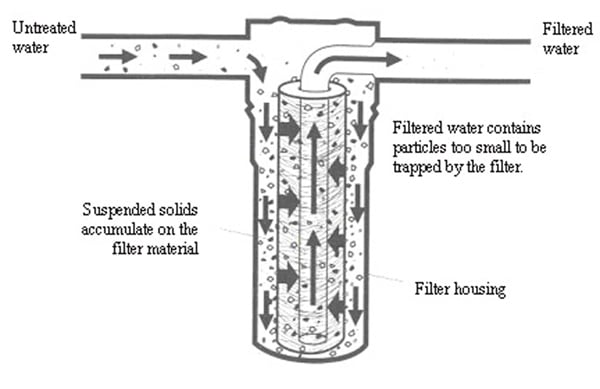
Fig. 1: Sediment Filtration Diagram
What is the difference between a sediment filter and a spin-out filter?
Both sediment and spin-out filters have the common goal of removing sediment from water. The significant difference between them is the holding capacity and how they tackle heavy sediment loads. Spin-out filters are designed with larger amounts in mind, featuring a bigger sediment chamber.
Water Filtration Method Two: Carbon Adsorption
Activated carbon filters are unique because they utilize a porous surface to capture microscopic particles and large organic molecules. The surface sticks to (adsorb) smaller molecules. You’ll commonly run into two basic types of activated carbon filters, granular and solid block.
Granular activated carbon is usually present in household drinking water filtration products. A bonus for these is that they are easy to install and economical. They are great for reducing bad taste and odors caused by chemicals like chlorine and its excess while leaving behind necessary nutrients that are good for health. Depending on the micron size, they may remove some microorganisms.
Solid block carbon filters feature a solid honeycomb structure. They’re usually found in whole-house filters, directly attached to the water supply. Although they are more expensive than granular carbon filters, they require less frequent installation and reduce more chemicals.

Fig. 2: Carbon Adsorption Diagram
Water Filtration Method Three: Ceramic Filters
Ceramic filters are typically found under the sink or on the countertop. The general types you’ll run into are the pot, cartridge, and candle. Sometimes, they are treated with silver (an antibiotic) to reduce bacteria and other microorganisms. They could also possibly contain carbon to help reduce chlorine.
One of the main benefits of the filter is that it is a low-cost option. With the ability to sort a list of contaminants, it may be good for most. The downside is that the flow rate is lower than that of carbon filters.

Fig. 3: Ceramic Filtration Diagram
Water Filtration Method Four: Distillation
A distiller is one of the oldest water purification methods, which superheats water until it vaporizes. The vapor is then transferred into a condensation chamber, where it cools and liquefies again. Any impurities are dropped off in the boiling water chamber.
Although it’s a classic means, it has several disadvantages. First, chemicals such as chlorine and pesticides have a lower boiling point than water. This means they are often carried over with the vapor and can even be more concentrated.
Second, the process isn’t energy efficient, so costs can rise and consume a lot of water. Third, the resulting water is very acidic and lacks any natural minerals – affecting the taste and health benefits. It’s not recommended to use this method to treat municipal drinking water.

Fig. 4: Distillation Process
Water Filtration Method Five: UV Filtration
In UV filtration, ultraviolet radiation is used to inactivate microorganisms, thereby sanitizing water. However, this method will not remove particles or chemicals and must often be combined with other methods of filtration.
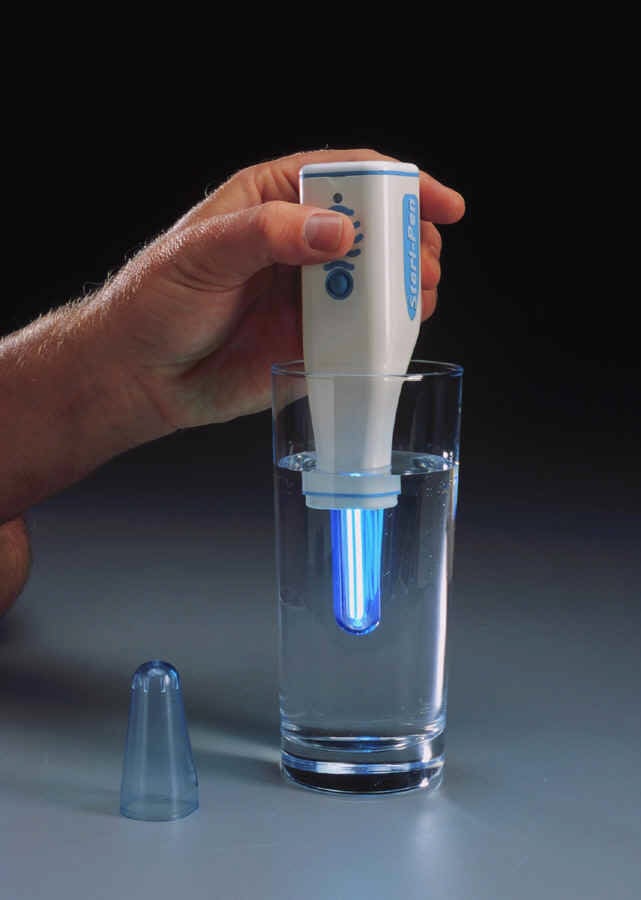
Fig. 5: UV Filtration
Water Filtration Method Six: Reverse Osmosis Filters
Osmosis is the diffusion of water across a semi-permeable membrane from an area of lower solute concentration to an area of higher solute concentraion. Reverse osmosis, as the name implies, is the reverse of this process. Water is forced from an area of higher concentration across a membrane which traps most unwanted water contaminants. This method of purification is highly effective, significantly reducing most particles, chemicals and microorganisms, but it uses a lot of water, and RO filter systems are more expensive than other types. They may be installed under a kitchen sink or fitted to a home’s main water pipe.
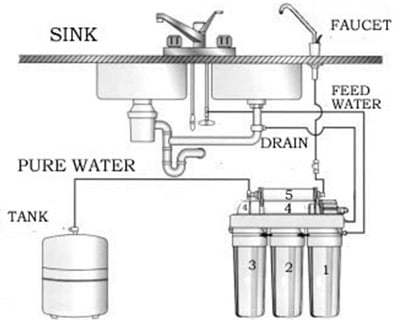
Fig. 6: Reverse Osmosis Filtration Diagram
Method Seven: Ion Exchange Filters
In the ion-exchange process, water travels across a bead-like spherical resin material containing ions which are exchanged with the ions in the water. The ion exchange method is typically used as a pre-treatment method to soften or deionize water. Because it does not remove particles or microorganisms, it should be followed by another method of filtration like carbon adsorption or reverse osmosis.

Fig. 7: Ion Exchange
For more information about water filtration, please check the following articles:


