






















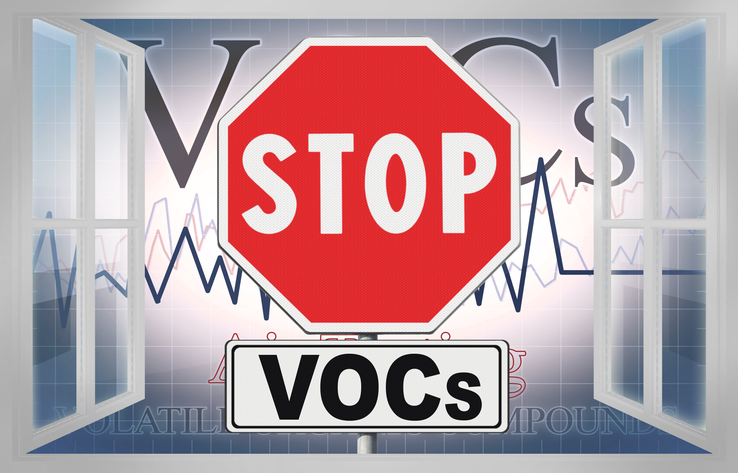
If you’re environmentally savvy, you may have heard of VOCs. This substance consistently interferes with achieving a clean air environment. Luckily, there are ways to ensure your home or business is clear. Let’s discuss what VOCs are and how to get rid of them!
What are VOCs?
The definition of Volatile Organic Compounds (VOCs) are vaporized chemicals in the air found in many of the materials we use daily. They’re usually classified based on their boiling point, volatility, and potential health effects. Very volatile compounds are known as VVOCs, and semi-volatile compounds are known as SVOCs.
Where do VOCs come from?
VOCs come from various sources, some of which can be artificial and some naturally created. They can be found both in and outside your home. Outdoor sources for VOCs include vehicle emissions, combustion from fossil fuels, wildfires, and industrial excess.

A Major Source of Volatile Organic Compounds in Your Home
Knowing where the primary source of volatile organic compounds is in your home can help you become aware of the subtle hazards in your surroundings. Indoor VOCs are a bit more challenging to locate. This is because they are found in our everyday products, including cleaners, cabinets, furniture, beds, carpets, aerosol sprays, and pesticides. They can be in paints and emitted from printers and copiers.
Is Carbon Monoxide a VOC?
Most people would believe that carbon monoxide is a VOC, but it is not. To be considered one, the element must be an organic compound containing carbon. Carbon monoxide is noted as an inorganic compound, which disqualifies it from being defined as a VOC.
Is Benzene a VOC?
Since Benzene is a hydrocarbon consisting of hydrogen and carbon atomical structures, it falls under the definition of a VOC. The compound is also known as a carcinogen, and it is very easy for it to evaporate. It can be found in tobacco smoke and gasoline.
Are VOCs dangerous?
Prolonged exposure to VOCs can be harmful to your health and wellness. Some volatile organic compound health effects caused by chemicals are irritation of your eyes, nose, or throat. Allergic reactions can also happen, resulting in hives and breathing difficulties.

How do I reduce VOCs from my home?
Now that you know where VOCs in your home could be coming from, reducing them is likely in tall order! The first thing you want to do is increase air circulation. For example, if you’ve just finished painting, open some windows and doors to help with ventilation. Doing so will increase the speed of what is known as the “off-gassing” process, which is how materials offload their chemical excess.
Chemicals in the off-gas phase naturally love humidity, so ensuring that your environment is cooled and temperature-controlled will help. You can reduce VOCs in your home by incorporating low-VOC products or a natural alternative to certain cleaners. Utilizing fans and implementing plants to absorb some of the VOCs can also be an essential part of prevention.
What is the best way to remove VOCs from the air in my home?
Air purification is the most effective way to eliminate VOCs from your home’s air. To be truly efficient, you’ll need to apply a two-part strategy.
Air Filtration VOC Strat: Part One
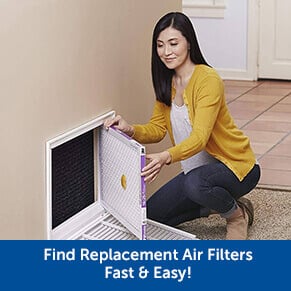
The first is to invest in quality air filters that can help reduce volatile organic compounds. These filters’ MERV ratings are usually within the 11 – 13 range.
What is the MERV rating system?
The Minimum Efficiency Reporting Value (MERV) rating system evaluates a filter’s effectiveness at capturing airborne particles. The higher the rating, the more efficient the filter. However, any filter past MERV 13 isn’t for residential use. Please visit the link below for more information on the MERV rating system.
Changing one time isn’t enough!
To protect your home from VOCs year-round, you must consistently replace the filters on time. We understand that this can be difficult, especially with how fast life happens. That’s why we recommend using our Home Filter Club subscription program.
Yes, you can set reminders or put post it notes on the fridge, but that’s still dependent on you having the time and focus to order replacements. With an auto-delivery program, you won’t have to worry about a thing. Simply choose to save with a subscription when you check out.
Remember to choose filters within the MERV 11 – 13 range.
Shop Filters Fast Brand Air Filters
Air Filtration VOC Strat: Part Two
The second part of the strategy is to equip your home with an air purifier. At the very least, you’ll want to ensure this air purifier utilizes an activated carbon filter. Activated carbon is the best media for capturing contaminants such as VOCs.
An air purifier equipped with a True HEPA filter will strengthen your home against this element for maximum protection. As with your HVAC filters, you’ll need to replace the filters for your air purifiers consistently. The standard carbon filter usually lasts around 3 -6 months, pre-filter about 3 months, and the HEPA filter around 6 – 12 months.
Guard your home against VOCs
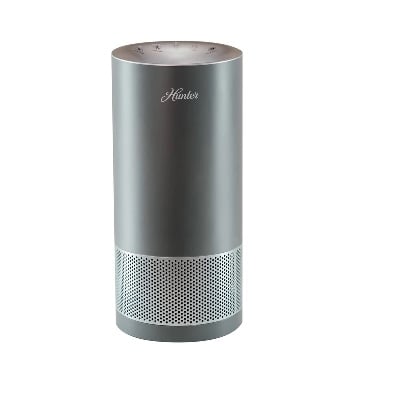
Hunter Cylindrical Tower Air Purifier

Breathe, Worry-free!
Researching volatile organic compounds can be stressful, especially when you realize they’re all around your home. Luckily, with knowledge comes power and the ability to ensure your environment is safe by utilizing the strength of air filtration. By incorporating some simple tips with the best air purification, you can breathe worry-free!
For more information on indoor air quality, please read the following articles:
- 4 Things That Could be Affecting Your Indoor Air Quality
- A Homeowner’s Guide to Improving Indoor Air Quality
- Why Your Indoor Air Quality is Important During a Crisis
- Indoor Air Pollution and You


Leave a Reply