























In 1999, The National Resource Defense Council conducted a four-year study that independently tested over 1,000 water bottles. The study found no assurances that bottled water is any cleaner than tap water. It was also discovered that people believe at least 25% of bottled water is tap water in a bottle.
The Environmental Working Group studied popular brands like Aquafina, Dasani, Crystal Geyser, and 6 out of 7 Nestle brands. They found they could not answer the following questions:
- Where does the water come from?
- Is it purified?
- How is it purified?
- Have tests found any contaminants?
A Columbia University study found that, on average, 240,000 detectable plastic fragments in a liter of bottled water.
The Food and Drug Administration (FDA) regulates bottled water but doesn’t require companies to use certified labs for testing or reporting the results. It also does not require that their labels to list ingredients or nutritional information.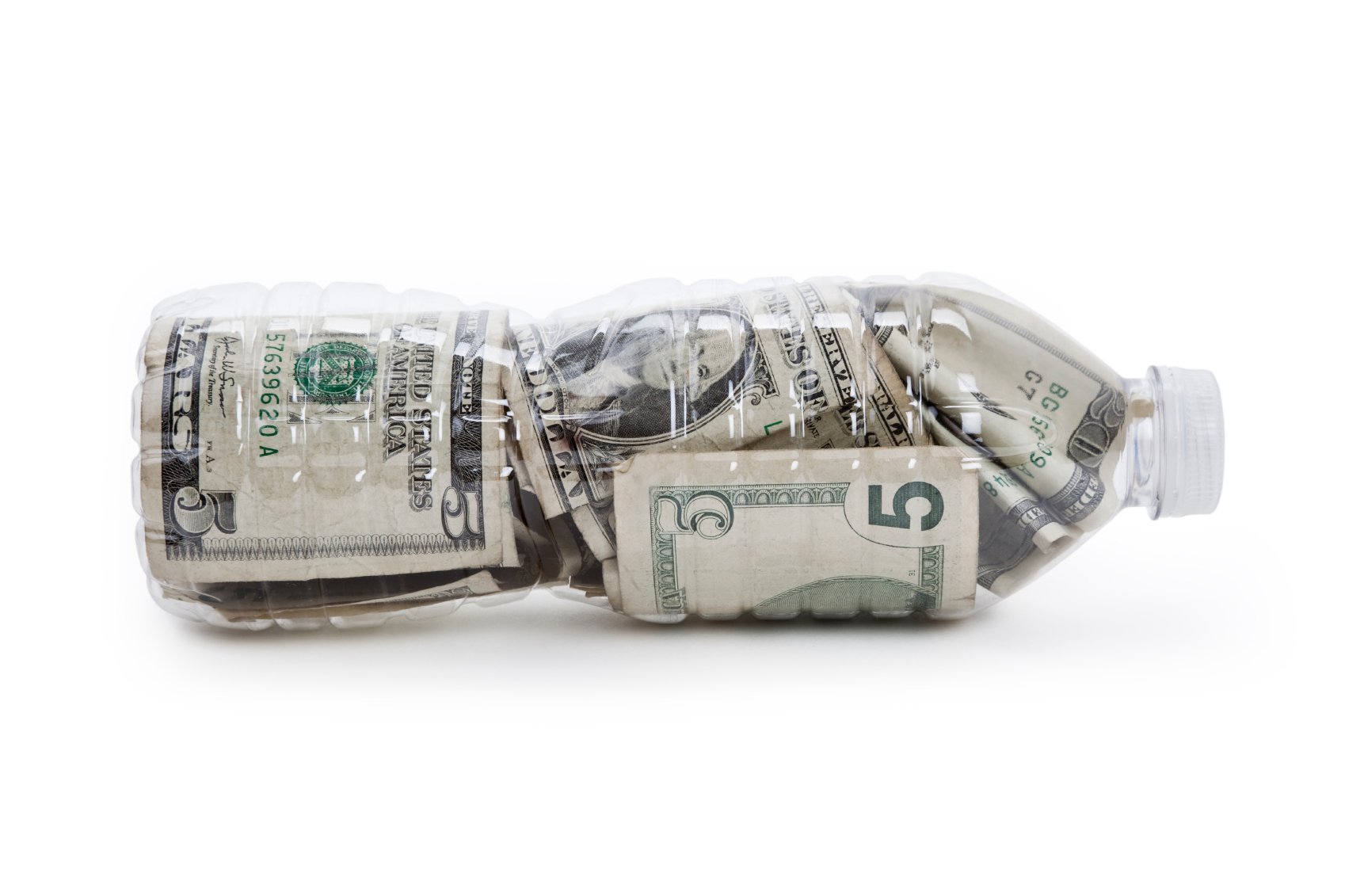
The cost of bottled water
The average cost of a 20-ounce bottle is about $1.50. The average cost for water supplied to a home is about $2.00 for 1,000 gallons.
Let’s do the math: 1,000 gallons of water equals 128,000 ounces. That means you are most likely paying $0.075 for each ounce of water in a bottle versus $0.000016 from the tap. To fill a 20-ounce bottle with tap water would cost $0.00031.
So why would you want to pay upwards of 1,800 times more per ounce over water from your tap?
Most people are spending money on a $100.2 billion bottled water industry that relies on the idea of clean drinking water.
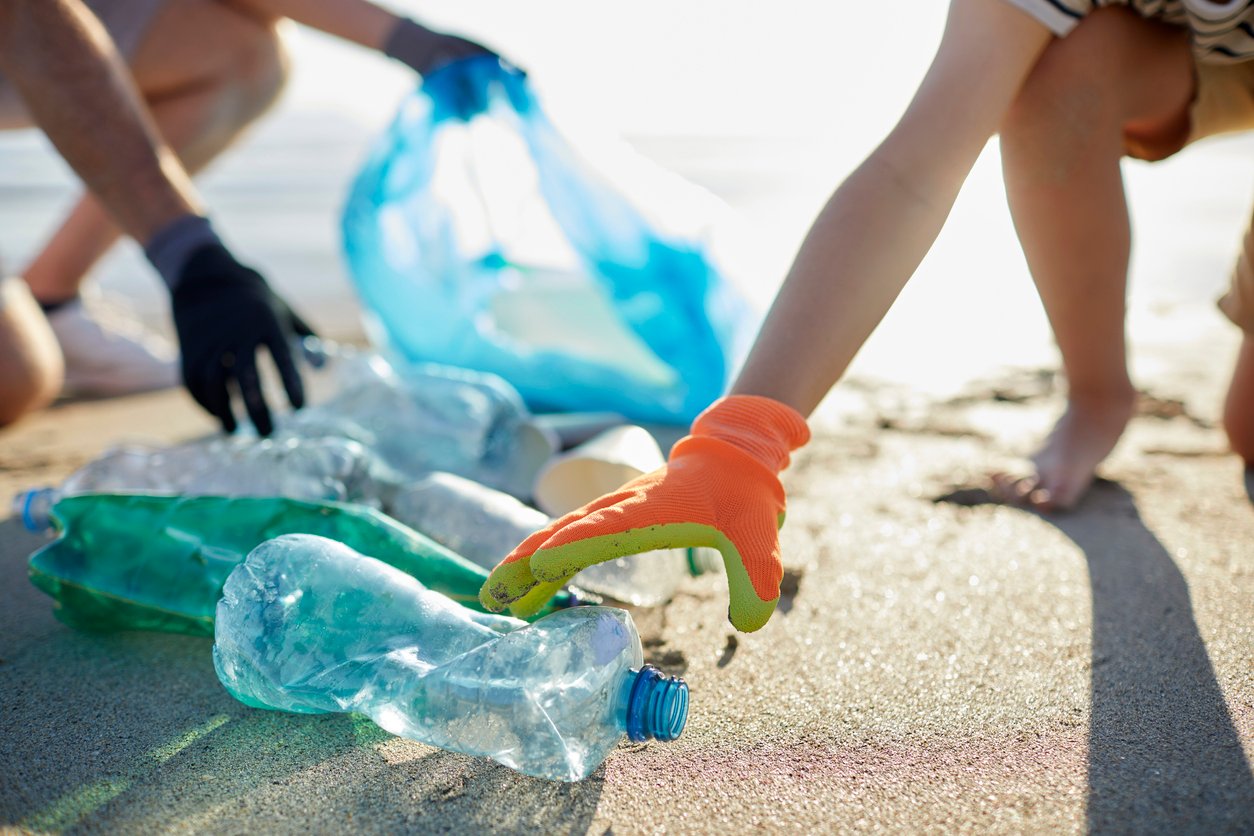
Did you know? Less than 30% of plastic bottles are recycled in the U.S.
Bottled water vs tap water
What comes out of your faucet might not give you the greatest confidence. You might experience unpleasant tastes or odors when you turn on your tap. Many people describe bottled water as tasting fresh.
If you are connected to a public utility, water takes a long journey from the source to your tap. The most common complaint about tap water is the taste and odor of chlorine. Chlorine is used as a disinfectant and has few health risks. However, there can be side effects.
If you notice an earthy or musty smell, it is likely the result of bacteria or algae growing on the inside of taps or around rubber washers.
If you notice a bitter, metallic taste, it could be a sign that your fixture needs to be replaced.
How to save money with filters
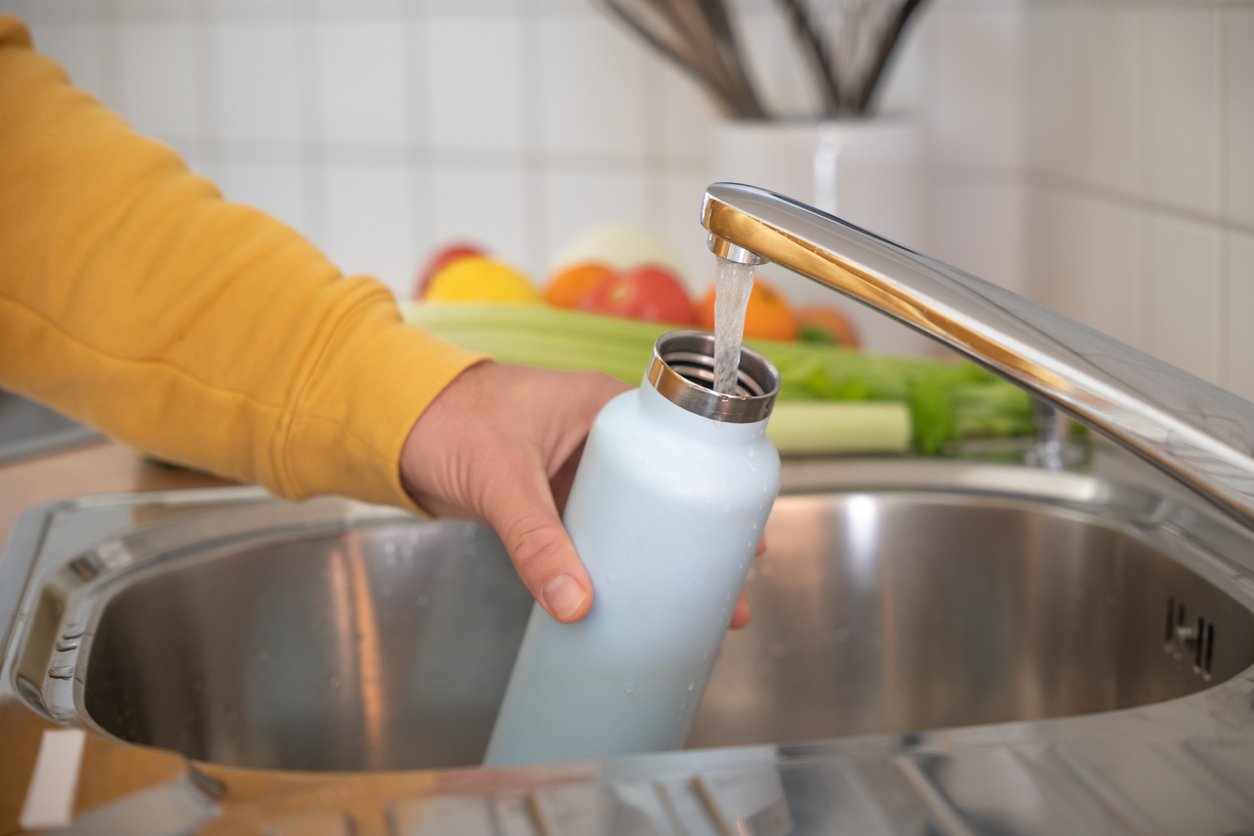
You can have clean and safe water without spending much money or polluting the environment. Water filters will often reduce the taste and odor of chlorine. You can also purchase filters that will reduce other common contaminants too.
A Brita replacement filter has a recommended capacity of 40 gallons, which converts to 5,120 ounces. One filter will fill 256 20-ounce water bottles. The recommended filter change is six months. This means you will only have to buy two filters annually.
What about refrigerator filters? Let’s look at the Whirlpool EDR3RXD1. This filter’s capacity is 25,600 ounces of water. You can fill 1,280 20-ounce bottles with one filter. Refrigerator water filters should be changed at least every six months, so you would only have to buy a refrigerator twice a year.

How much would it cost if a family of 4 consumed the recommended 64 ounces of fluids per day for a whole year?
- Bottled water: $3,120
- Tap water: $292.80
- Brita Pitcher: $292.80 + cost of 2 filters
- Whirlpool Refrigerator: $292.80 + cost of 2 filters
The estimates above take into account the average cost of a bottle of water and the average cost of 1,000 gallons of tap water.
Water filters will reduce or remove bad tastes and odors. They are better for the environment because they last longer, use less plastic, and can save you thousands of dollars. Looking for other ways to save money? Check out our blog all about money-saving tips. It’s time to make the switch and ditch bottled water for good!



Brandon says
Hello Dannette, thanks for your comment. We’d recommend starting your search by using the model number of the water dispenser or if you have a filter in it already, find the part number printed on it. If you have any more questions, feel free to reach out to us at [email protected] or call 866-438-3458. Take care!
Dannette Cooper says
Can’t find the right filter for the water dispenser for my dogs
Brandon says
Michael, thanks for your comment. To ensure that TDS is reduced in your water from your fridge, you’ll need to invest in a reverse osmosis system and connect it. This will ensure the purest water for your home. If you aren’t ready to go that route, you could get a filtered water pitcher that specifically targets TDS. Try this one! ZeroWater Filtered Water Pitcher.
Michael Sposeep says
What about TDS through refrigerator filters? I have found not much difference than tap water.