



























News reports about high lead levels in many places in the U.S. and worldwide keep coming out. The frustrating part is that residents often did not know their drinking water contained poisonous lead.
Time is key, especially when it comes to lead contamination. You don’t want to wait too long to discover that your water has been contaminated with lead. So, how can you get ahead of it?
In this blog, we’ll discuss why testing for lead in water is key, what signs to look for, what resources are available, and what systems you can invest in to protect you and your family from lead in your drinking water.

Why is lead dangerous?
Lead in water is harmful, especially for young children. Exposure can lead to physical and behavioral effects in children. However, it can also cause adults to suffer cardiovascular effects, including increased blood pressure and the incidence of hypertension, decreased kidney function, and even male and female reproductive problems.
The Environmental Protection Agency (EPA) says that lead’s maximum level contaminant goals (MLCG) is 0. Even the best available science shows no safe exposure level for lead.
How does water get lead in it?
Lead is a naturally occurring mineral. However, lead contamination usually does not happen at groundwater sources. The leading source of lead exposure is when lead-containing plumbing materials corrode. This is especially common when water is highly acidic or has low mineral content.
Lead pipes are more common in older cities and homes built before 1986.
How do I know if my water has lead in it?
The best way to determine if your water has lead is to test it. Filters Fast carries water sampling options, many of which will give you test results in minutes!
The most important thing to look for in a water test kit is the list of contaminants it tests for. Some kits will test for multiple contaminants, and some will test for just a few. To test for lead, you must ensure it is listed in the kit’s description.
This ITS Sensafe Water Quality Test Kit tests for lead.
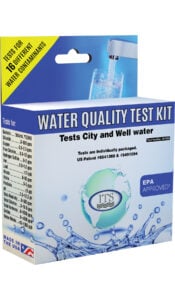
ITS Water Quality Test Kit
Where to find more information about lead and drinking water safety
Lead in water is a significant risk to public health. The EPA is an excellent resource for information about lead and drinking water.
You can also utilize your local resources, such as your water supply’s annual Consumer Confidence Reports. You can also see if your Health Department has a fact sheet or hotline for water safety and violations.
Trusted independent organizations like the Water Quality Association (WQA) and NSF International are continually publishing up-to-date guidelines and information about water standards, filtration, and testing.
If you get water from a private well, contact your local extension office or a certified lab for testing recommendations and regulatory information.
It’s essential to continually research and ensure the information is from a trusted resource.

How to determine if your home has a lead service line
Maybe you inspected your service lines before moving into your home, or you know your water lines don’t contain lead. If you’ve confirmed that you do not have lead service lines, the most common problem is with brass or chrome-plated brass faucets and plumbing with lead solder.
But how can you tell if your plumbing is the issue?
It is always best to consult a professional in situations like this. Have a plumber come and take a look, or contact our local water provider. You likely don’t have lead pipes if your water pipes are non-shiny grey. Copper pipes are usually reddish-brown, and brass pipes are more yellow-gold.
Here’s a simple DIY way to identify if you might have a lead service line coming into your home:
- Locate your water service line. It is usually in the basement, crawlspace, or wherever water enters your home. The pipe usually comes through the wall or floor and has a water shut-off valve nearby.
- Using a penny or a key, gently scratch the pipe. If it’s shiny or silver, it may be lead.
- Take a magnet and see if it sticks to the pipe. If it does, it’s steel; if it doesn’t, it is likely lead.
- Even if your water line isn’t the source of the lead, faucets or solder could be, especially if your home is older.
Are there programs to help pay for water testing or lead service water replacement?
Many states, cities, and public water systems have programs or offer assistance to help cover water testing costs. Some communities may even offer free or discounted water lead test kits. We recommend asking your local water department or checking their website for details.
Local grants or financial assistance may be available for lead service line replacement, especially if your dwelling was built before 1986. Contact your city’s water utility or local health department to determine what your area offers. You can also check with a non-profit organization, which occasionally partners with neighborhoods to ensure safer drinking water.
It never hurts to ask; many programs exist to help you ensure safe, lead-free drinking water. You just have to find them!
Tips to reduce exposure to drinking water
If you discover any amount of lead in your water, don’t worry – you have options. In addition to investing in a water filtration system, here are a few tips to help reduce your lead exposure:
- Run your water for several minutes before using it for drinking or cooking.
- Use cold water for drinking, cooking, or making baby formula.
- Clean your faucet aerator; this is a place where lead particles can collect over time.
- Utilize local resources or utility updates to stay informed about lead in your area.
What do I do if my water has lead in it?
Discovering exposure to lead in your drinking water can be overwhelming. If you are worried about lead in your water in the future, a water filtration system is a good choice. It effectively removes lead from your water. More importantly, use certified filters to remove or reduce lead specifically and change them often.
Below is a list of a few available systems that can reduce or remove lead from your water once installed.
Water Filtration Systems that Remove Lead
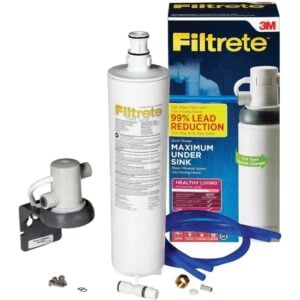
3M Filterete 3US-MAX-S01 Maximium Under Sink Filtration System
3M Filtrete Maximum Under Sink Filtration System Benefits:
- 99% Lead Reduction
- Ideal for bathrooms and kitchens
- Affordable
- Reduces 99% microbial cysts
- Reduces chlorine taste and odor
- Removes sand, sediment, rust, and soil down to 0.5 microns
- Easy to install
- Easy to use
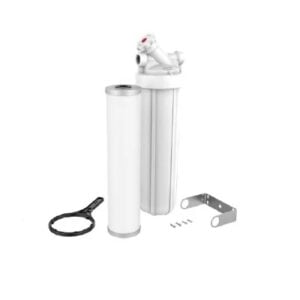
Pentair Heavy Duty Lead Reduction Filtration System
Pentair Heavy Duty Lead Reduction Filtration System Benefits:
- Professional-grade lead reduction
- Minimal pressure drop
- Built-in flow restrictor
- Filtration without sacrificing water pressure
- Fibredyne cartridge technology that enables 2x flow efficiency
- Reduces impurities coming into your home
- Point-of-use solution
- Get clean, clear, and delicious drinking water straight to your tap.
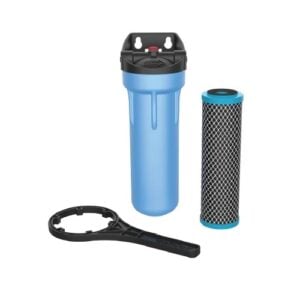
Pentair High Flow Lead Reduction Filtration System
Pentair High Flow Lead Reduction Filtration System Benefits:
- Reduces/and or removes chlorine taste and odor
- Reduces/and or removes cysts such as Cryptosporidium, Giardia, and Lead
- High-flow lead reduction filtration
- Environmentally friendly drop-in design
- Integrated pressure release button
- Features Fibredyne technology that reduces premature sediment plunging
- Includes housing, filter cartridge, and filter wrench
Best Water Filters for Lead
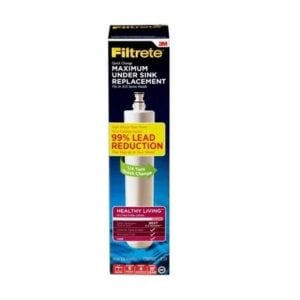
3M Filtrete 3US-MAX-F01 Under Sink Replacement Filter
3M Filtrete Under Sink Replacement Filter Benefits:
- Replacement filter for the 3M Filterete 3US-MAX-S01 Maximium Under Sink Filtration System
- Reduces 99% Lead
- 99% microbial cysts reduction
- Reduces chlorine taste and odor
- Captures as small as 0.5 micron particles of sand, sediment, rust, and soil
- Easy to install
- 6-month filter life
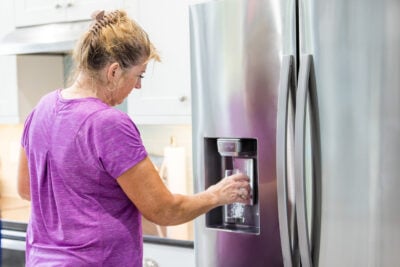
Refrigerator Water Filters with NSF53 certification are certified to reduce lead.
What are other sources of lead exposure?
Unfortunately, water isn’t the only way you can be exposed to lead. A common culprit is lead-based paint, which was used in many homes built before 1978.
Other sources of lead include soil from busy roads or older buildings, and even airborne particles from construction sites or industrial activities. Lead can also be lurking in pottery, certain toys, and even foods grown in contaminated soil.
Priority to Protect
Lead in drinking water is not something to be taken lightly. Your top priority it to protect your family and our mission is help you to do just that. We’re here to equip you with the knowledge and tools you need to help your family live a healthier, happier life. If you have any questions or need assistance please reach out to us at 866-438-3458 or [email protected].



Leave a Reply