
























Drinking water is essential to survival. But is drinking filtered water good for you?
Drinking water helps your cells function, supports circulation, boosts brain function, protects your joints and organs, aids digestion, and much more. Yes, the amount of water you drink helps ensure healthy body function, but the water quality is just as important.

Water accounts for about 71% of the Earth’s surface, but only 3% is freshwater. Although water may seem plentiful, only a small fraction is accessible and usable. Everyone and everything needs it, but unfortunately, over 2 billion people use water contaminated by feces.
Waterborne diseases are responsible for an estimated 485,000 deaths per year.
Waterborne illnesses are a major global health issue, and it’s essential to ensure that everyone has access to clean and safe drinking water. We’ve partnered with Wine To Water to bring clean water, sanitation, and empowerment to people across the globe. To learn more about our partnership, click the button below.
Location, Location
Your access to safe water might be limited depending on where you live. Although waterborne disease outbreaks are rare in the United States and other developed countries, they can still happen.
If you live in the United States, you most likely source your water from a municipal water treatment plant or a private well.
The water supplier is responsible for ensuring your water is safe to drink. However, they can only provide clean water to your house’s entry point. From there, you are responsible for ensuring your water is safe for you and your family.
For those who get their water from a private well, it is not regularly tested or filtered, so it is your responsibility.

Is tap water safe to drink?
Tap water usually comes from a local river or groundwater source. It is treated using basic filtration techniques, and chemicals are added to reveal and remove particles. The water may also undergo sand filtration to filter larger debris before adding chlorine to kill bacteria and microorganisms. The water is then delivered via pipes to your home.
The Environmental Protection Agency (EPA) regulates water suppliers to ensure that the contaminants allowed in drinking water are not higher than they should be. Although chlorine is safe for human consumption, it could be potentially carcinogenic and lead to other health complications. Drinking tap water can also lead to lead exposure if lead is present in your pipes.
Although tap water is the cheapest and most available water source, not using a filtration system to filter it before you consume it could be doing more harm than good.
In the US and most developed countries, tap water is safe to drink. However, tap water is commonly treated with chlorine to disinfect it, which can affect its taste or smell. Other common issues that can impact the taste or smell of tap water include sulfur or iron from plumbing, sediment, or minerals from the water source.
However, there are a few exceptions:
- Any water source that is not regularly tested or treated (e.g. well water)
- Areas with aging infrastructure (e.g., lead in pipes in Flint, Michigan)
- Areas affected by natural disasters with compromised water supplies.
- Violations at local water supplies (e.g. boil water advisories)
To ensure your water is safe to drink, you can order an at-home test kit, contact your local water utility for a Water Quality Report, or get your tap water professionally tested by a certified lab.
Why is drinking filtered water important?
Filtering your water will, at minimum, improve the taste and odor of the water you drink. Depending on the type of filter and its certification, it can also reduce contaminants that impact health, including lead, VOCs, and cysts.
In recent years, PFOS and PFAS levels have increased and impacted many US water supplies. These chemicals stay in our bodies for a very long time, and we are just now learning the detrimental effects they can have on our health. You can read this blog to learn more about PFAS and how it’s affecting drinking water.
Your water quality will depend on your location and supply, so it’s essential to understand precisely what is in your water, how it can affect you, and what you can do about it.
Firstly, know what’s in your water. There are multiple avenues to find out:
- At-home water test
- Professional water test
- Local Water Quality Report
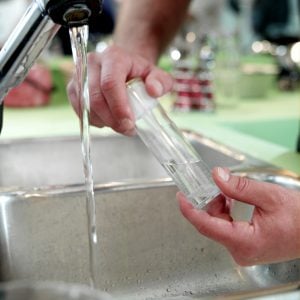
What does water testing do?
There are various water testing kits on the market, so you must select the proper test to provide you with the information you seek. Some drinking water test kits will tell you how much of a contaminant is in your water, while others may just let you know that a contaminant is present.
How to Choose a Water Test Kit
Chlorine is a common contaminant, especially in the US. Almost all city water suppliers use chlorine or chloramine to disinfect drinking water. Chlorine levels may vary from city to city, but this is the most common contaminant that can affect the taste and smell of water. If the chlorine level in your water concerns you, find a water test kit that checks for chlorine.

WaterWorks™ 2 Free & Total Chlorine Test Strips
Some at-home tests may check for only one contaminant, while others may check for multiple. Typical impurities in tap water may include lead, nitrates, arsenic, and disinfection byproducts. If you want to check for a broader range of contaminants in your water, you can. You will want to purchase a more comprehensive water test kit.
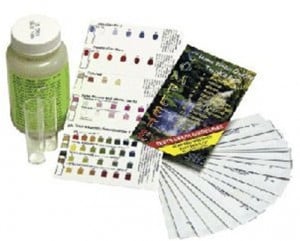
ITS Complete Home Water Quality Test Kit
Like most things, your water testing needs are unique. That’s why selecting the water analysis test kit that best encompasses the information you’re trying to discover is essential.
Let’s Talk About TDS
TDS stands for Total Dissolved Solids, a common term in the water filtration industry. What is TDS? TDS is the concentration of dissolved organic and inorganic matter in water.

Is TDS bad?
Tap water also has various TDS levels, including beneficial minerals and harmful contaminants. A 50-150 ppm TDS level is usually considered safe for consumption.
You don’t necessarily need to strip your water to have 0 TDS because you are losing the essential minerals available in water that your body needs. If you decide to filter your water to have 0 TDS, supplement your water intake to ensure you get adequate vitamins and minerals your body needs. You can add mineral drops, remineralize your water, or eat a mineral-rich diet.
TDS in drinking water is not bad, but it can indicate a water quality issue. Unfortunately, most tap water in the United States has between 200 and 400 ppm TDS levels. Water with a higher TDS level may taste bitter, salty, metallic, or have an unpleasant odor. If the water is reading 500 TDS or higher, this could be a sign that the water is high in lead, arsenic, or nitrates, which have adverse health effects.
If you’re interested in knowing the TDS level of your water, you can purchase a TDS meter for your convenience.
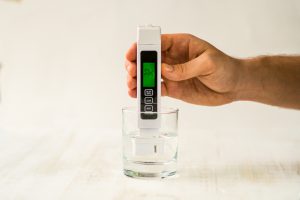
HM Digital TDS-EZ PPM Water Quality Tester
Will drinking 0 TDS water steal minerals from your body?
Drinking water with 0 TDS will not steal minerals from your body. Some claim that demineralized water steals minerals from your body, weakens bones, and causes deficiencies. However, scientific evidence proves this claim wrong.
The human digestive system will not pull minerals from your bones or tissues if it is not getting enough. The kidneys and gut are responsible for regulating mineral absorption and excretion. It is not based on the minerals you get from drinking water alone.
The food you eat is your body’s primary source of naturally occurring minerals. Water only provides a tiny fraction of the minerals your body needs. Unless you have a poor diet, you are not at risk of mineral loss when you drink 0 TDS water.
Benefits of Filtering Your Water
Filtering your water has many health benefits and is cheaper than buying plastic water bottles.
How to Choose the Right Water Filtration System
After testing your water, you should invest in a water filter system that will reduce or remove the contaminants.
Luckily, there are many options, and they vary in price, size, and maintenance.

Water Filter Pitcher
The most convenient and affordable solution. Filtration pitchers have different capacities, materials, filtration capabilities, and price points. You can choose from a minor-capacity pitcher that is easy to grab and refill or a larger dispenser that you can store in the fridge or on the counter for easy access and fewer fill-ups.
Are you wondering which one is right for you? Our Buyer’s Guide: Pitcher Water Filters is a great resource.
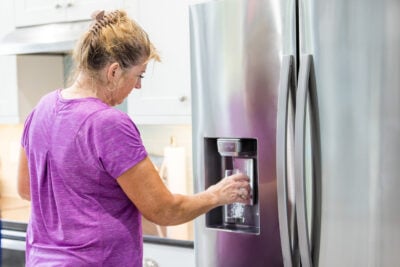
Refrigerator Water Filters
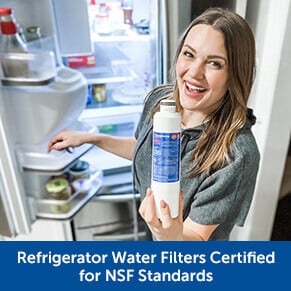
You have a refrigerator water filter if your refrigerator has a water and/or ice dispenser. Fridge water filters are typically made with activated carbon media and are certified to reduce chlorine taste and odor. Some refrigerator water filters are certified to reduce contaminants that cause health effects, including lead and pharmaceuticals.
Shop Refrigerator Water Filters

Countertop
Designed to fit easily and conveniently on top of your kitchen counter, countertop water filters are an excellent solution. Usually equipped with an adapter or water reservoir, countertop water filtration systems are easy to install and maintain and are typically economical. You can choose from various sizes and finishes, but make sure that you take note of the compatible filters offered, how often they will need to be changed, and how the system will need to be installed. Some countertop systems may include a faucet that must be installed near your kitchen sink.
To help make your buying decision easier, check out our Buyer’s Guide: Countertop Water Filters.
Reverse Osmosis Filter Systems
Generally regarded as the best filtration system, RO water filtration systems use multiple filters to purify water. As the water passes through each filter, contaminants are captured and retained. What makes RO systems so special is the use of a membrane filter to capture microscopic particles. RO systems are usually pricier and require multiple filters; most require a storage tank. Before investing in this system, you’ll need to consider many factors, including where it will be installed, how often the water filters will be replaced, and how much installation and maintenance are required.
Want to know more about reverse osmosis systems? Check out our blog, What is a Reverse Osmosis Water Filter System?
Shop Reverse Osmosis Filter Systems
Whole House Water Filtration System
Whole-house filtration is exactly what it sounds like—filtration for your entire house. This filtration solution benefits every sink, showerhead, and appliance. Whole-home water filters are installed on the main water line at the entry point and equipped with a filter housing that requires a specific filter size. You can get a bit more custom when selecting a filter. Whole-home filter options usually include sediment filters, carbon filters, UV purification, or water softening. While this solution is often more costly upfront, it offers long-term savings.
Check out our blog for more information about Whole House Filtration Systems.
Shop Whole House Water Filter Systems
High quality water is vital to your health and daily life, which is why it’s so important to ensure that you have access to clean water and that you change your filters regularly. There are various ways to filter water, so it’s vital to ensure that your chosen filtration method meets your unique needs. If you need assistance with selecting the filtration solution that works best for you, our Customer Care Team would be happy to help you find exactly what you’re looking for. Contact us at 866-438-3458
or [email protected].



Leave a Reply