


























Flint Drinking Water Contamination At a Glance
- The amount of lead in Flint, Michigan’s water supply is over 10 times greater than in Detroit.
- Contaminants in the water supply were caused by drawing highly acidic water from the Flint River without proper treatment, which caused a protective mineral layer inside of lead pipes to dissolve. The pipes corroded, and lead leached into the water supply.
- Officials denied there was anything seriously wrong for almost a year and took steps to improve water quality without understanding the dangers of continuing to allow residents to drink from their tap.
- Lead has many negative health effects. Some can be prevented by immediately reducing exposure to the toxin. Others are permanent and can result in cognitive decline in children, anemia, or death.
- There is no known safe level of lead a human can be exposed before suffering health problems.
- Home water filtration systems that meet NSF Standard 53 or 58 can reduce up to 99% of lead in your water supply.
- Remember to replace existing filters as recommended. Your old filter may no longer be effective. Learn more here!
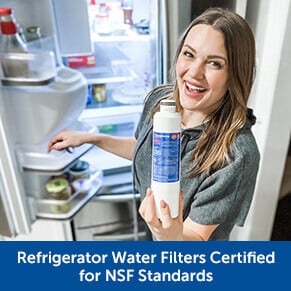
- You can buy refrigerator water filters, in-line water filters, reverse osmosis systems, and many other products that reduce lead and other contaminants sometimes found in water when you shop at Filters Fast.
- Read on for more…
Flint, Michigan, is known for helping shape the American automotive industry. General Motors’ first factory opened in the city, later becoming its central manufacturing base. At its peak in the 1960s, the city housed a population of nearly 200,000. GM employment reached 80,000 in 1978. Since those boom days, the once great manufacturing base withered to 8,000 people still employed in GM 2010. Fewer than 100,000 residents remain inside Flint’s borders.
With the realities of changing economic conditions came the decision from Flint officials to no longer buy water from Detroit for what they saw as unfair prices. Construction for a new pipeline running from Lake Huron began in 2010. In the interim, Flint will need a new water supply and begin drawing water from the Flint River. Residents began complaining about smell, taste, and appearance after this decision. It wouldn’t be long until the first reports of health problems from lead contamination began to trickle in, leaving an entire populace shaken.
Why is There Lead in The Water Supply?
Until action was taken under the Safe Drinking Water Act in 1986 and later amendments in 1996, lead pipes and fittings were still used to supply water. While using these materials was eventually considered dangerous, inside pipes that carried drinking water, a mineral buildup occurred over many years. To consumers, this is commonly referred to as limescale. While troublesome for home fixtures and appliances like coffeemakers, the inside of lead pipes helps prevent material corrosion and thus greatly reduces the risk of lead contamination.
In the case of Flint, officials failed to properly treat water from the Flint River that had a high acidic content. The protective layer of minerals inside pipes dissolved, and soon after, the pipes corroded, and high levels of lead leeched into water supplies. The acidity of the water was so bad that in October 2014, General Motors stopped using the water in an engine plant because parts were rusting.
Can Lead Exposure Affect Human Health?
According to the Centers for Disease Control and Prevention, at least 4 million households have children living in them who are exposed to high levels of lead. Approximately half a million U.S. children ages 1-5 have blood lead levels above 5 parts per billion, the reference level at which the CDC recommends public health actions be initiated.

This is troubling because children aged 6 years and under have an increased risk of developing developmental disabilities if exposed to lead. The effect on human health extends to all ages, where high enough levels can attack the brain and central nervous system, resulting in coma, convulsions, and death.
If elevated levels of lead are found in your body, treatment begins with removing the source of contamination. Once contained, levels in your blood will reduce over time. In more severe cases, drug therapies will be employed. Despite a reduction of lead in the environment or your body, permanent damage could have already occurred. For children, reduced IQ and behavioral changes are commonly reported. Anemia, hypertension, renal impairment, immunotoxicity, and toxicity to the reproductive organs can also result. Because there is no known safe blood lead concentration, even small amounts can have drastic mental and physical implications.
How Badly Contaminated Is the Water in Flint?
Testing during a 2015 Virginia Tech study that followed resident complaints showed up to 90% of homes had levels of lead at 27 parts per billion, more than 10 times what is found in the water of Detroit homes. Michigan Governor Rick Snyder requested $28 million Wednesday for funding in part to address potential health issues of an estimated 9,000 children who may have suffered lead poisoning. This is an estimated number of children and doesn’t include pregnant women who may have consumed unsafe water.

For Flint, Michigan, additional steps to reduce acidity in water, completion of the new Lake Huron water line, and plans to boost phosphate levels in the water to rebuild scale inside of pipes where lead was used will help prevent further contamination. Note that not all water supply lines are at risk. Water lines built in the latter half of the 1900s are made from cast iron, concrete, or PVC. However, the likelihood of higher levels of lead in water supplies will remain an issue for many residents with older water lines.
What Filtration Options Should I Consider?
Inside your home, the first step is to safely remove lead paint immediately. Homes built before 1978 with their original paint may contain lead. Laboratory testing, chemical spot tests, or portable analyzers can help you test for lead.
For your water, drinking water filters tested and certified for Standard 53 and 58 can reduce up to 99% of lead. As stated before, there are no known safe levels of lead, and how different amounts will affect people isn’t entirely known. When shopping for water filtration, it is important to understand that all water filters are not made the same.
If you want to know if your filter meets NSF standards, just look for the blue logo. The National Sanitation Foundation, now known as NSF International, sets many public health standards that manufacturers, regulators, and consumers use. As a consumer interested in home water filtration, you will commonly see products advertised with NSF Certification for Standards 42, 53, and/ or 58. Remember that these standards cover a range of contaminants that may or may not be in your water. If these contaminants are found in your water, most filters can reduce their levels by around 90%. Remember that the amount of contaminant reduction can vary between manufacturers, the quality of water coming into your home, and the age of the filter.
What Are The Different Standards?
- Standard 42 covers aesthetic effects. This includes non-health-related contaminants such as chlorine taste and odor and particulates such as dirt.
- Standard 53 targets specific health-related contaminants. These include Cryptosporidium, Chromium, Giardia, lead, mercury, total dissolved solids, TRICHLOROETHANE, volatile organic chemicals, and many more. To read more about NSF Standards 42 and 53, check out our blog, NSF Standards Explained
- Standard 58 applies to reverse Osmosis filters and covers a range of contaminants like arsenic, Chromium, CYSTS, lead, mercury, total dissolved solids, and many more. To see more about reverse osmosis filters, read how this very effective filtration method works.
I Understand Better, But What Now?
If you have concerns about the potential for lead or other contaminants in your water supply, purchasing an easy-to-use home water test kit may be the first step. Once you identify the water quality problem, decide what filtration method could work for you. Bathing in water that contains lead, for example, is relatively safe. This is the case with many contaminants that you may find in your water so long as you aren’t drinking the water or submerging an open wound or cut. While shower water filters can help reduce chlorine and make skin and hair softer, a filter with high contaminants reduction in this application is unnecessary.
Most people get all of their drinking water from the sink or the refrigerator. In either application, a filter system that employs a filter that meets NSF Standard 53 or 58 is ideal. This can include a convenient refrigerator water filter, an inline water filter, a reverse osmosis system, or an under sink filtration system. With any of these installations, you can expect water that is safer to drink.
If you already use filters inside your home, check that existing filters are not outside of their recommended replacement period. Old filters may not provide protection against listed contaminants.
FiltersFast.com offers a variety of filtration products. If you still have questions or want to learn more about improving the water quality you drink, call us at 866-438-3458 or email us at [email protected].


Leave a Reply